

Animal Aid Foundation research that showed a new foundation who to talk to, what to say and how to raise more donations
In brief
PAU is a new Ukrainian animal aid foundation. The team needed to understand which market to enter, what to communicate and to whom, how people decide to donate, and how to raise more.
We ran desk research and interviews covering four aid areas, charity markets, fundraising platforms, donor profiles and the strongest campaigns in the niche. Then we turned it all into strategic conclusions and answers to the key questions for each area.
The foundation is preparing to launch, so budgets and some decisions stay with the client. Here we show how we found the answers.
Scale
Before asking for a donation, we worked out who gives, why and to what: aid areas, donor profiles, how people decide to donate, the strongest campaigns in the niche and the fundraising model. Here is part of that work: more than a hundred research slides.

Programs
Where a new foundation should start
Direction 01 · step 1
Shelters
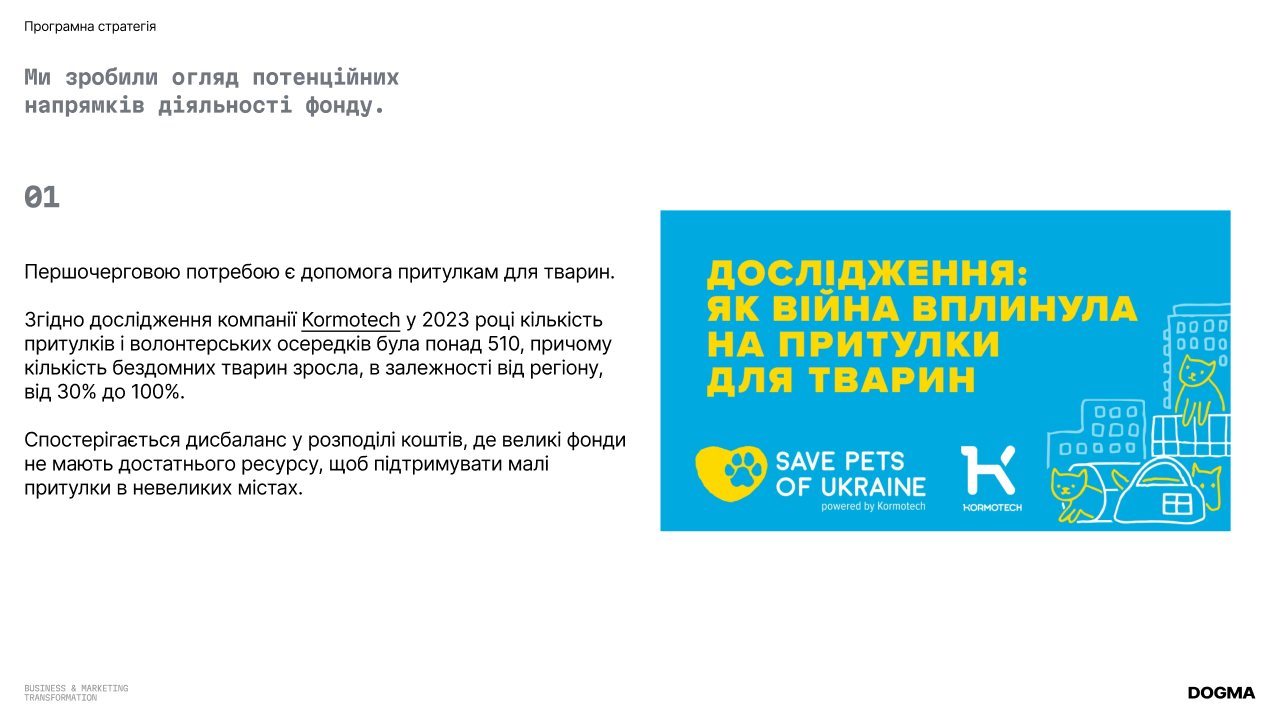
More than 510 shelters and volunteer groups, while the number of stray animals has grown by 30–100%. Small shelters in small towns stay off the radar of large foundations.
Direction 02
Evacuation
Moving animals out of frontline areas. Everything hinges on shelter capacity.
Direction 03
Farm animals
Veterinary care for livestock in rural areas.
Direction 04 · step 2
Rabies program
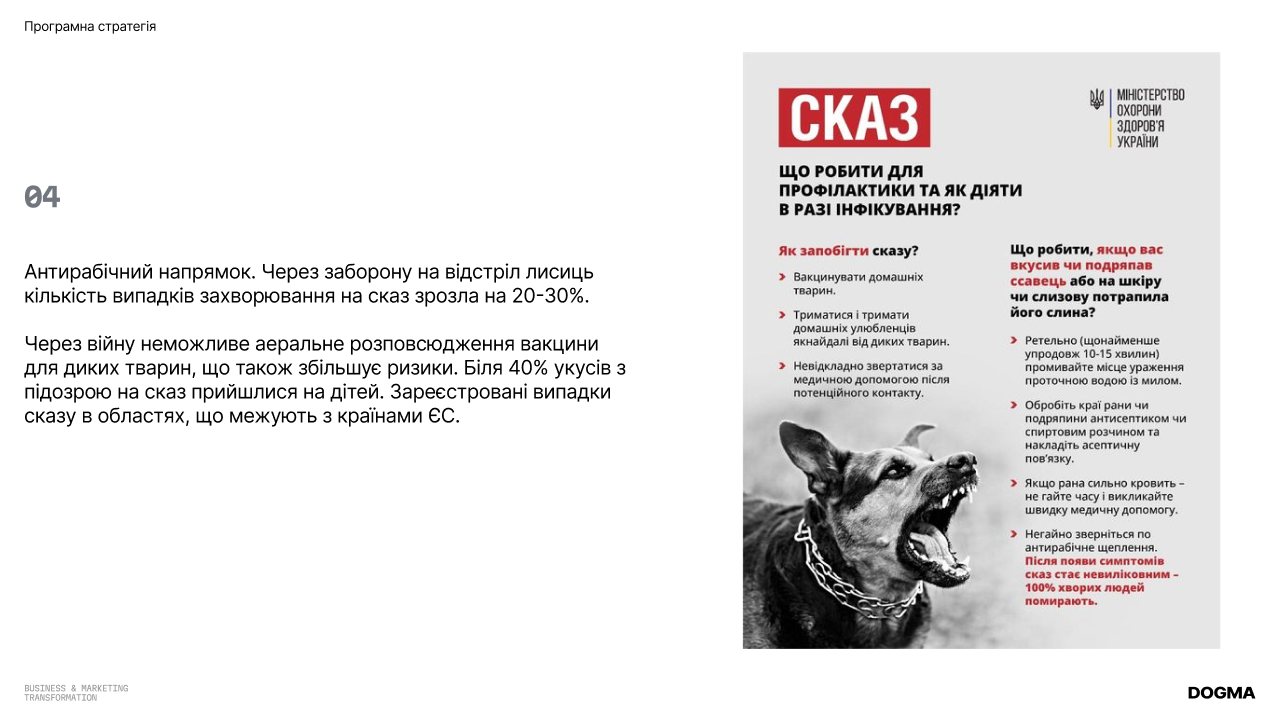
After the ban on fox culling, rabies cases rose by 20–30%, and about 40% of bites with suspected rabies involve children. A mobile team vaccinates pets and farm animals.
- 1
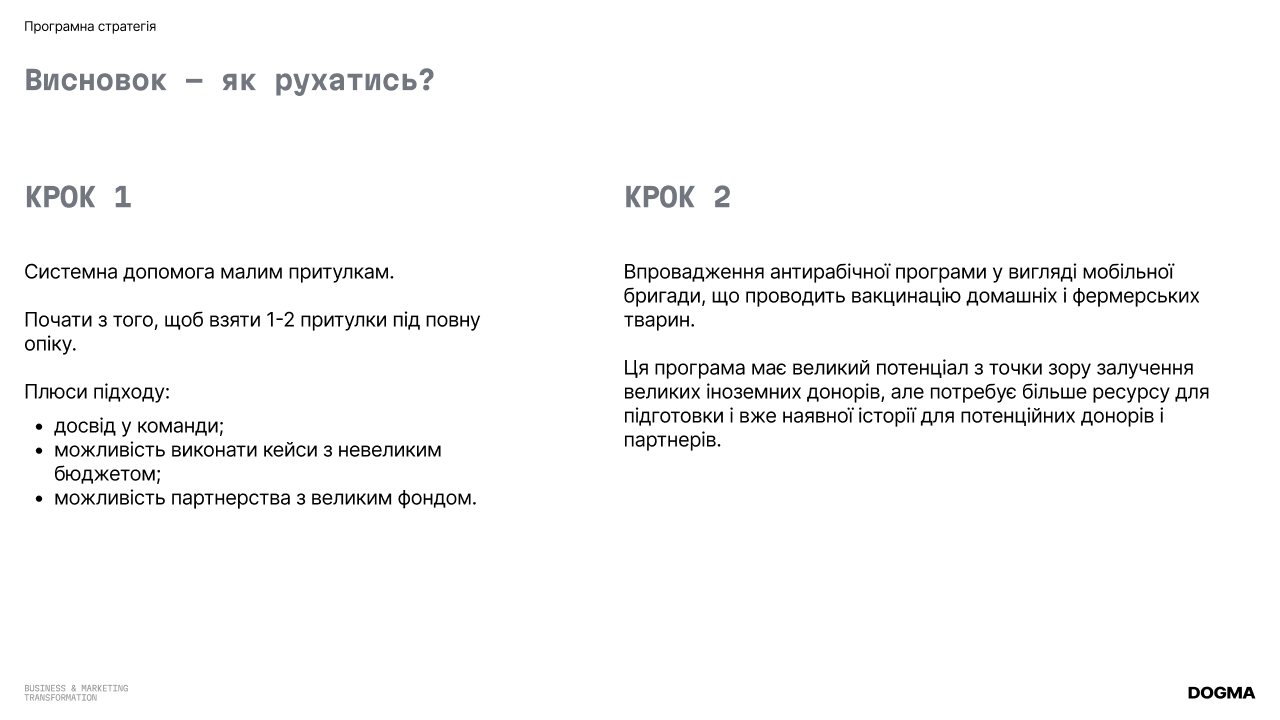
Take 1–2 small shelters under full care
The team has experience, the first cases can be delivered on a small budget, and the foundation gains a story to show partners.
- 2
Launch the rabies program
A program for major foreign donors. It needs more resources and an existing track record, so it comes second.
Markets
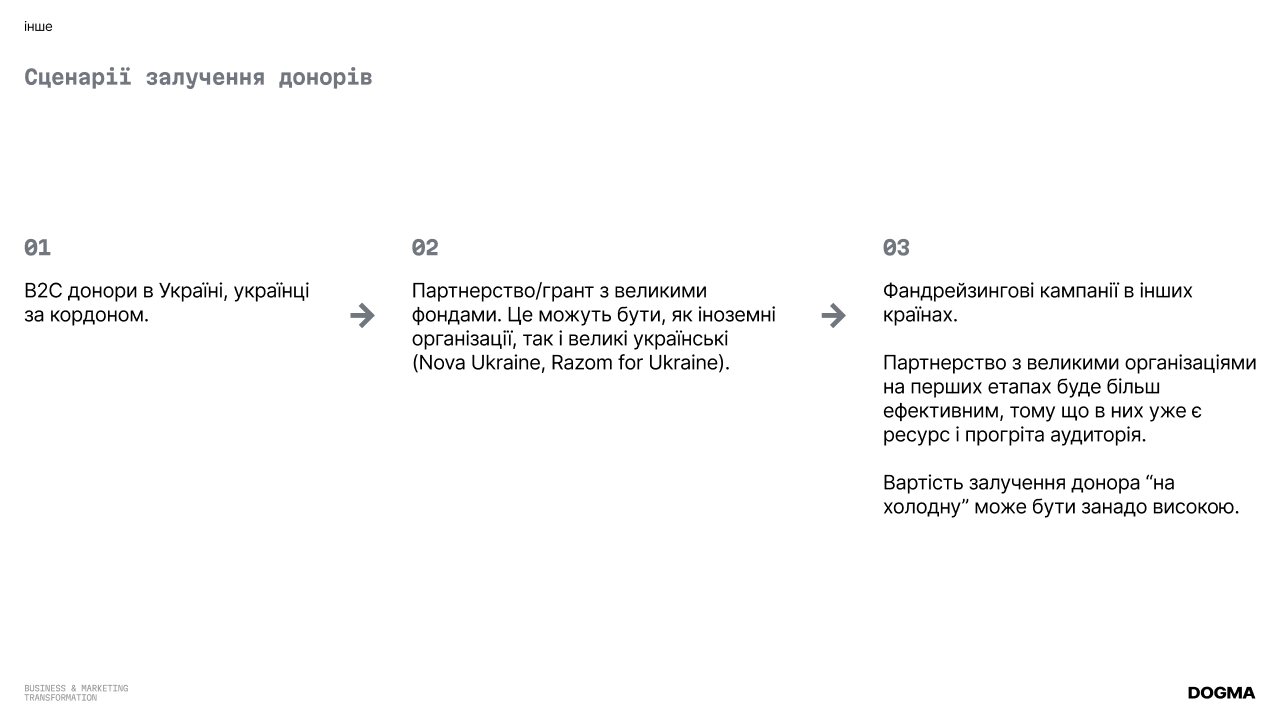
Five countries and an honest answer on where to go alone and where to go through partners
Selection criteria
- Fundraising platforms
- Legal transparency of entry
- Local partners
- Loyalty to Ukraine
- Animal welfare culture
- Language barriers
USA
Entry- 340M
- population
- 67%
- of households own pets
- $11.83B
- “animals and environment” sector
Donor profile
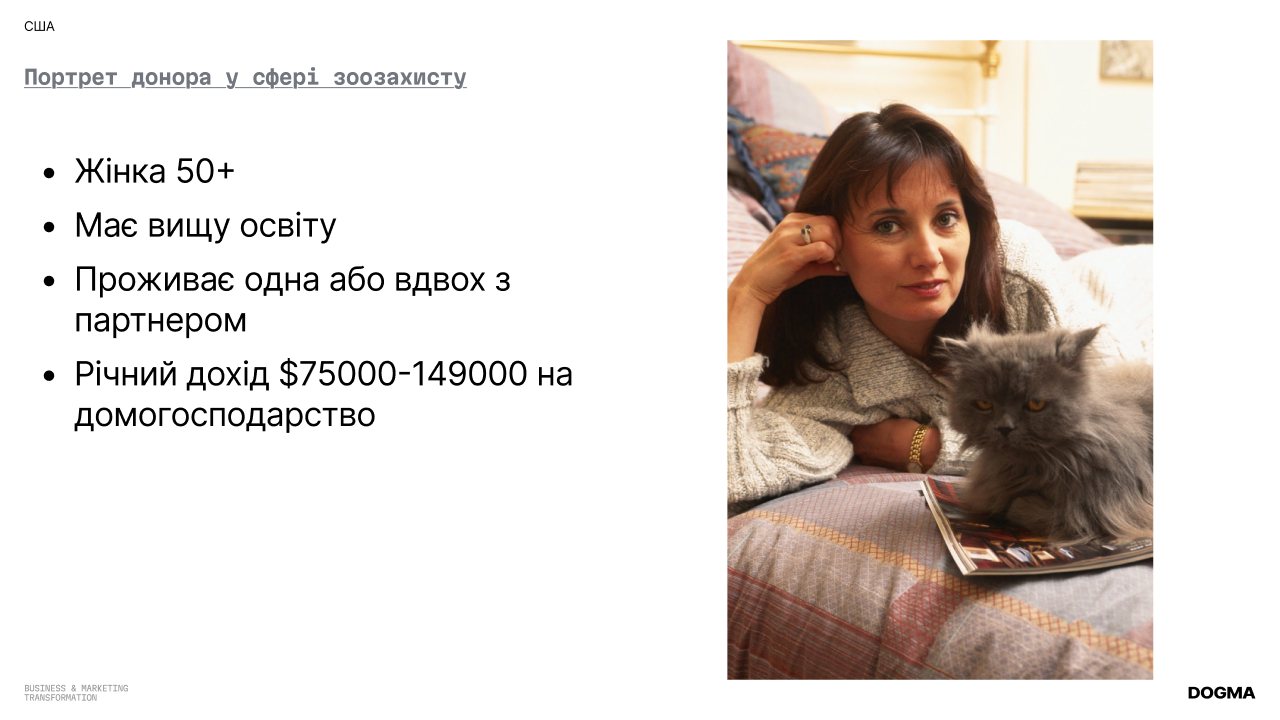
Woman 50+, college-educated, lives alone or with a partner, household income $75–149K a year.Tax-exempt status
501(c)(3) or a fiscal sponsorVerdict
The world’s largest charity market with developed fundraising infrastructure. Platforms and fiscal sponsorship soften the long registration process.United Kingdom
Partnership- 55%
- of Britons donated in 2024
- £72
- average monthly donation
- #1
- animal welfare among causes
Donor profile
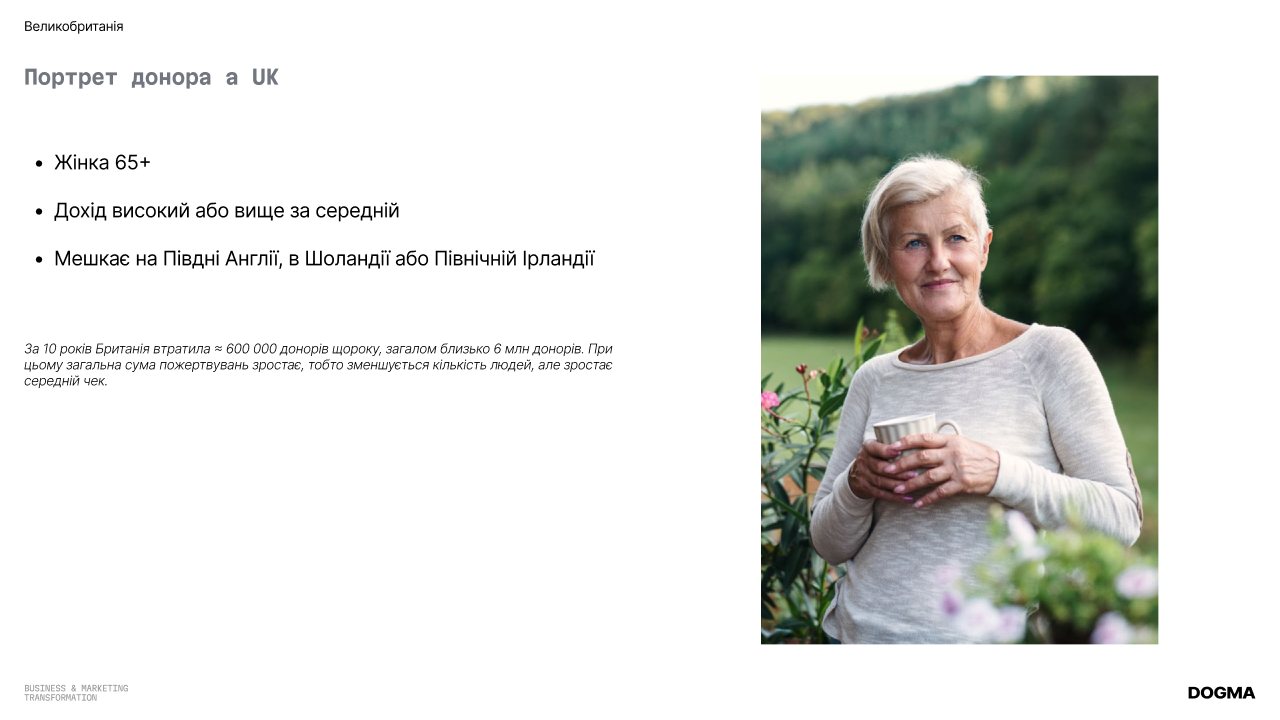
Woman 65+ with above-average income. The donor base shrinks by 600K a year, while the average gift grows.Tax-exempt status
Gift Aid: +25p on every £1, for UK charities onlyVerdict
High loyalty to Ukraine and a strong animal welfare culture, alongside strict requirements for new organizations. A local partner is the better route.Canada
Partnership- 41M
- population
- 58%
- of households own pets
- 18%
- of gifts are monthly
Donor profile
A large Ukrainian diaspora. Donations are falling, while the average gift grows.Tax-exempt status
Registered charity (CRA)Verdict
Registration is similar to the US, with a smaller audience, a bilingual market and strong players already in place.Netherlands
Further research- 70%
- of the population donate
- €1.4B
- charity market
- 13
- “public benefit” areas, animal welfare among them
Donor profile
Value efficiency, transparency and measurable impact; half give up to €10 a month.Tax-exempt status
ANBI, with no Dutch legal entity requiredVerdict
ANBI status is available without local registration: a transparent entry route for a foundation with full reporting.Germany
Further research- €22B
- charity market
- 350K
- animals enter shelters every year
- 43%
- of fundraising comes from companies
Donor profile
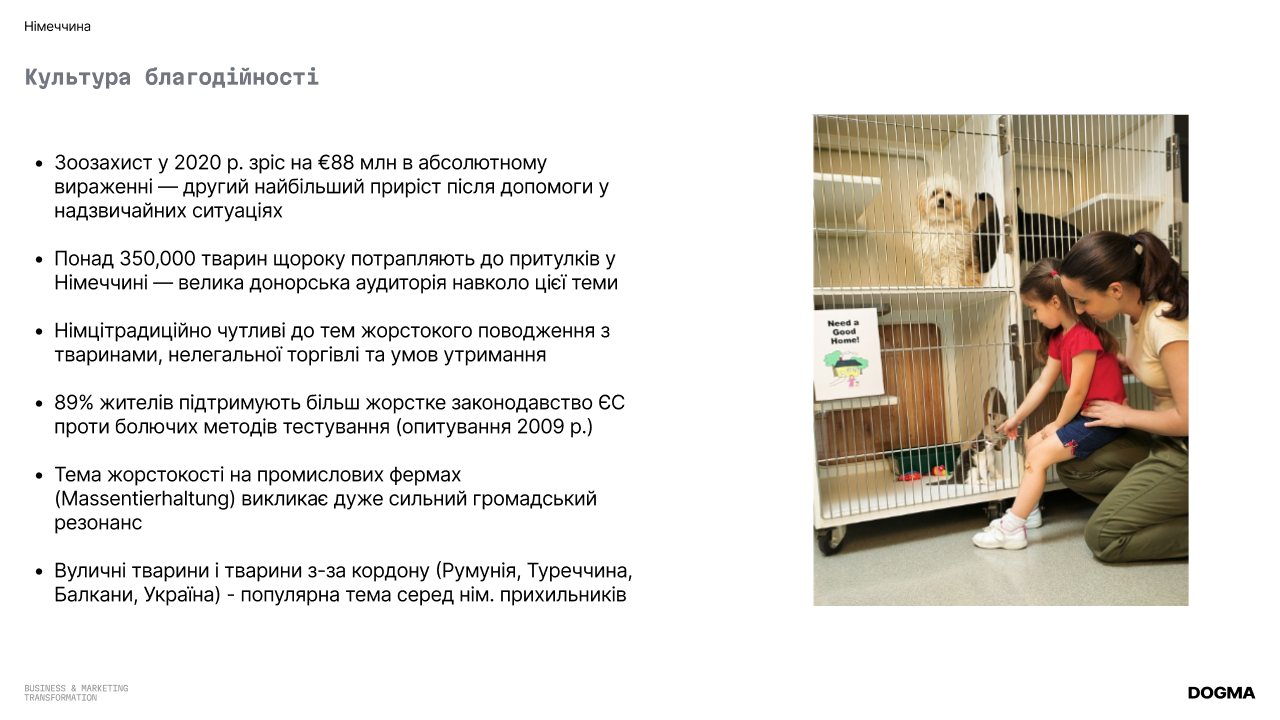
Sensitive to animal cruelty; animals from abroad, including Ukraine, are a popular cause.Tax-exempt status
Gemeinnützig status from the tax officeVerdict
Europe’s leader in corporate giving: the way in runs through business partnerships.For each country we analyzed fundraising platforms, legal requirements, tax benefits for donors, the largest foundations and their positioning, cases of aid to Ukraine and niche areas. Figures come from open sources.
What we found
A donation is an act of trust
- 01
The key insight
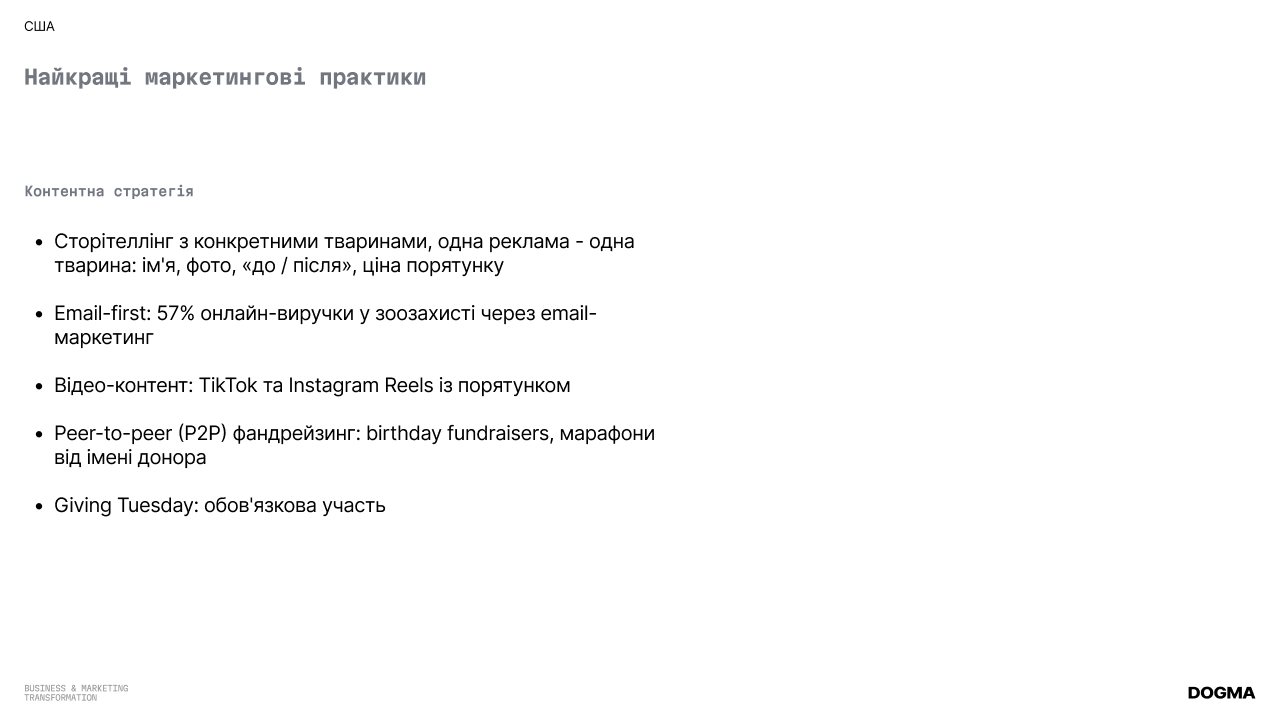
People give when they see a specific animal and proof that the money worked. The website, content and reporting all have to rest on this.
Purchasepaid and forgotTrustI see the animal, I see the result - 02
A subscription beats a one-off donation
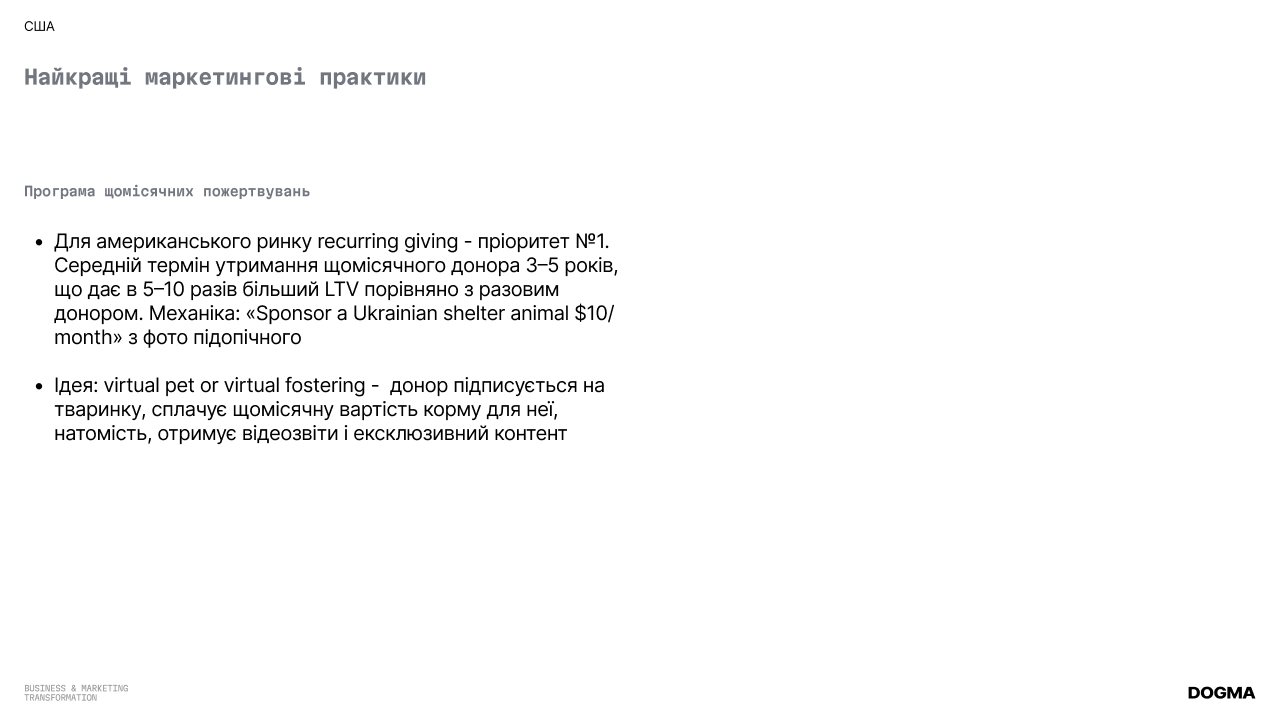
A monthly donor stays 3–5 years and brings 5–10 times more than a one-off giver. So the foundation’s core product is a subscription to a specific animal.
- 03
Specifics over appeals
“$44 = spaying one animal” persuades better than “help shelters.” One ad, one animal: name, photo, before and after.
- 04
Trust has a rating
A profile on Charity Navigator and GuideStar, admin costs below 20% and an endorsement from a well-known organization: that’s the pass to a foreign donor.
- 05
Hope outperforms guilt
ASPCA replaced guilt-driven pressure with stories about its programs: donations rose by 40%, and revenue in test markets by 57%.
Model
Every action fuels the next
StoryA specific animal from a shelter: name, photo, cost of the rescue.
PostThe story goes out on social media, email and the website.
DonationA person helps for the first time, once.
SubscriptionFrom a one-off donation to a monthly subscription to an animal.
ReportBefore and after brings the donor back and attracts new ones, and the cycle starts again.
Without a system, a foundation easily slips into pretty posts and burns out within a month. So we built a model where each step takes the donor one step deeper: from viewing to a one-off donation, from one-off to a subscription.
Roadmap
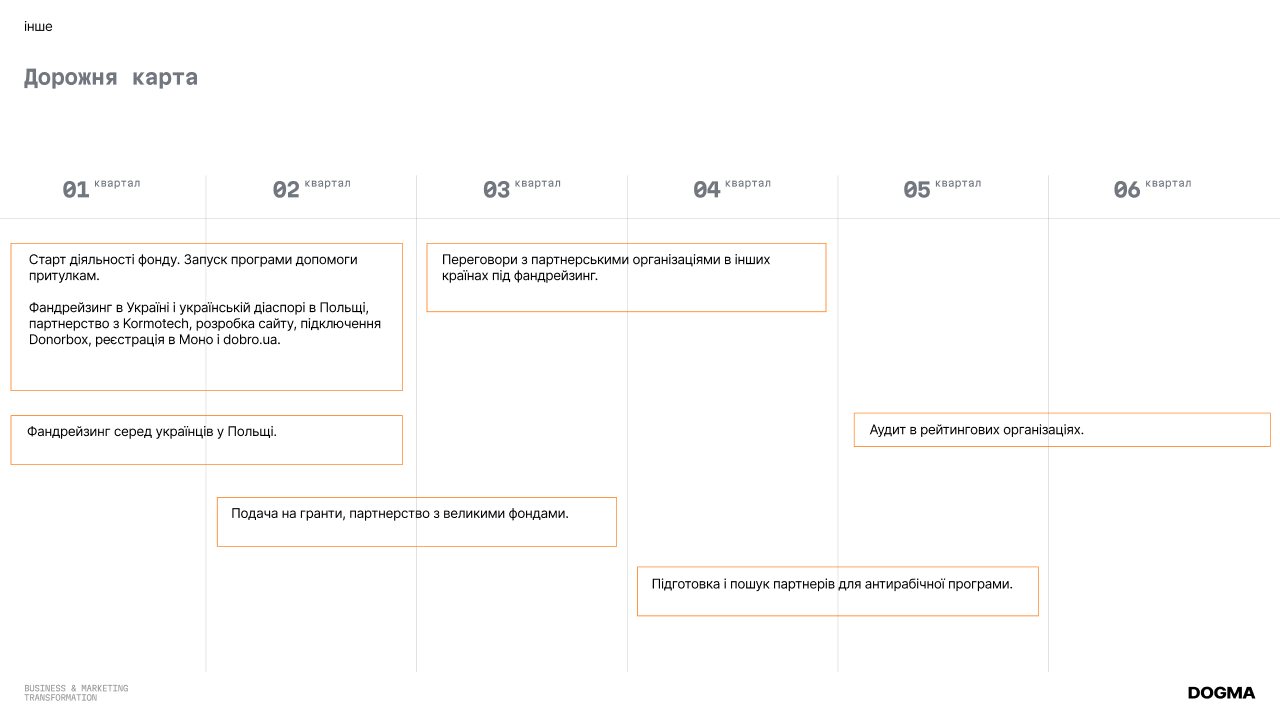
Six quarters: from the first fundraiser to major donors
Quarter 01
Launch
Shelter aid program, fundraising in Ukraine, website and fundraising platforms.
Quarter 02
Partners
Talks with partner organizations abroad.
Quarter 03
Trust
Audit for international trust ratings.
Quarter 04
Diaspora
Fundraising among Ukrainians abroad.
Quarter 05
Grants
Grant applications and partnerships with major foundations.
Quarter 06
Scale
Preparing the rabies program and finding partners for it.
Result
The foundation got answers to the key questions before launch: what to fundraise for first, which market and audience to target, what to tell them and how a donor decides to give. Plus a model that turns a one-off donation into a subscription, so the foundation raises more.
The research became the basis for the next stage: a brand, a six-month launch strategy, a bilingual website with animal subscriptions and a pilot campaign with the first before-and-after case.
What we’ll do for you
Research that makes it clear where to start
For when there’s good intent and an open question of where and how to raise funds. We’ll analyze markets, donors, platforms and best practices and turn them into a model ready to launch.
-
 01 Market research Countries, donors, platforms, legal statuses.
-
 02 Fundraising model From story to subscription and report.
-
 03 Roadmap What to do in the first quarter and beyond.
Team
- Agency
- DOGMA
- What we did
- Desk research, program strategy, donor country selection, fundraising platform review, roadmap
- Client
- Animal Aid Foundation (under NDA)